As we prepare for the 2025 Global Forum (13 – 17 October) marking ten years of the Milan Urban Food Policy Pact, we're bringing insights from our work across Africa and Asia on how city governments and local food markets can transform urban food environments and wider food systems.
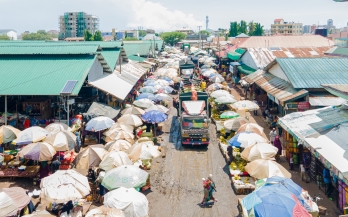
Walking through any bustling urban food market, from Pemba (Mozambique) to Arusha (Tanzania) and Bogor (Indonesia), is a remarkable experience. Beyond the offerings of fresh, dried, iced and frozen produce, spices, cooked traditional meals, and animated negotiations between vendors and customers, the experience of the market is at the nexus of food systems and nutrition policies and daily realities. These markets are about more than selling and buying food; they are where the future of food systems, within cities and across urban–rural landscapes, borders, and territories, is being lived, innovated, and imagined.
When we tell people we analyze the environmental and nutritional impacts of food, we're almost always met with the same question: “So, what should I eat?” It's a deceptively complex question that highlights one of the greatest challenges facing our food systems today—how do we nourish a growing global population while protecting the planet we all share?
This challenge has driven us at the Global Alliance for Improved Nutrition (GAIN) to develop a new approach that we're excited to share in our latest briefing paper, "Nourishing People and Planet: Enviro-Nutritional Insights into Local Foods for Policy, Programmes, and Industry."
Five years ago, fragmented food systems data made it challenging for stakeholders to take away meaningful insights for evidence-based decision-making. Today, the Food Systems Dashboard has transformed the data landscape and become an indispensable resource for food systems stakeholders worldwide, providing nearly 200,000 users with comprehensive, visual data and expert analysis that can help turn data into action and insights into impact.
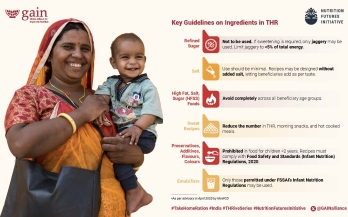
The Take-Home Ration (THR) component of India’s Supplementary Nutrition Programme, the world’s largest
flagship supplementary feeding programme under POSHAN 2.0 and Saksham Anganwadi, is a key intervention to improve the nutrition of children 6-36 months, adolescent girls, pregnant women, lactating mothers. THR has evolved over the years to ensure it provides adequate amount of daily and protein for children and PWLMs, with recent updates emphasizing macro- and micronutrient profiles and limiting added sugars, salt, preservatives, and synthetic additives.
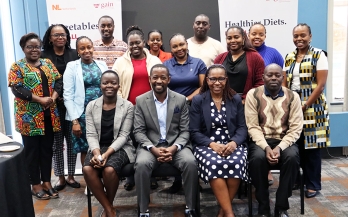
Senior editors and nutrition media champions met in Nairobi on Friday for a Media Roundtable on Nutrition Education and Advocacy, jointly hosted by the Ministry of Health and the Global Alliance for Improved Nutrition (GAIN) Kenya.
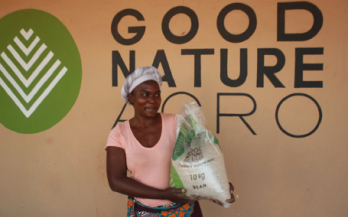
Chimoio, Mozambique – A white Hino truck rattles under its own weight on the bumpy road, while its tires throwing particles of dust from the asphalt in the air from the district of Cantandica, Manica province, central Mozambique.
Investing in companies that support nutritious food value chains could be a triple win for farmers’ livelihoods, their nutrition, and that of the end consumers of their products – but how do we know it actually works? Over the past few months, the Nutritious Foods Financing Facility (N3F) has been working with our first few investees and the leading impact-measurement specialist 60 Decibels to try and find out.
Food packaging is ubiquitous in the modern world but also easily forgettable: once we’ve dumped the crackers out of their bag and into our hand, or scraped the last of the yoghurt out of the bottom of its plastic pot, we usually toss the packaging into the bin without a second thought.
If food waste were a country, it would be the world’s third-largest greenhouse gas emitter, after the U.S. and China: not only does it represent the use of resources and environmental impact without a clear benefit, but as it decomposes in landfills, it releases methane and carbon dioxide. What if some of this could be avoided, and in a way that improved access to safe, nutritious foods for those who need them?
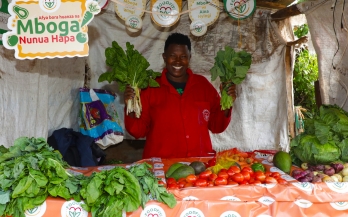
Mary Wamuyu Gathemia, a 41-year-old mother of two, runs a vibrant vegetable stall in Muthumi Village, Muguga Ward, Kabete Sub-County, Kiambu County. For years, Mary operated a small general shop selling household items and a few groceries. However, her shop struggled to break even, and she was on the verge of closing it to focus on being a housewife.